Connect with us

News

GALOP Project: Tamale Mayor cuts sod for construction of 6-unit classroom block at Zakaliyili
Published by Inusah Dondaliya

25th February 2026

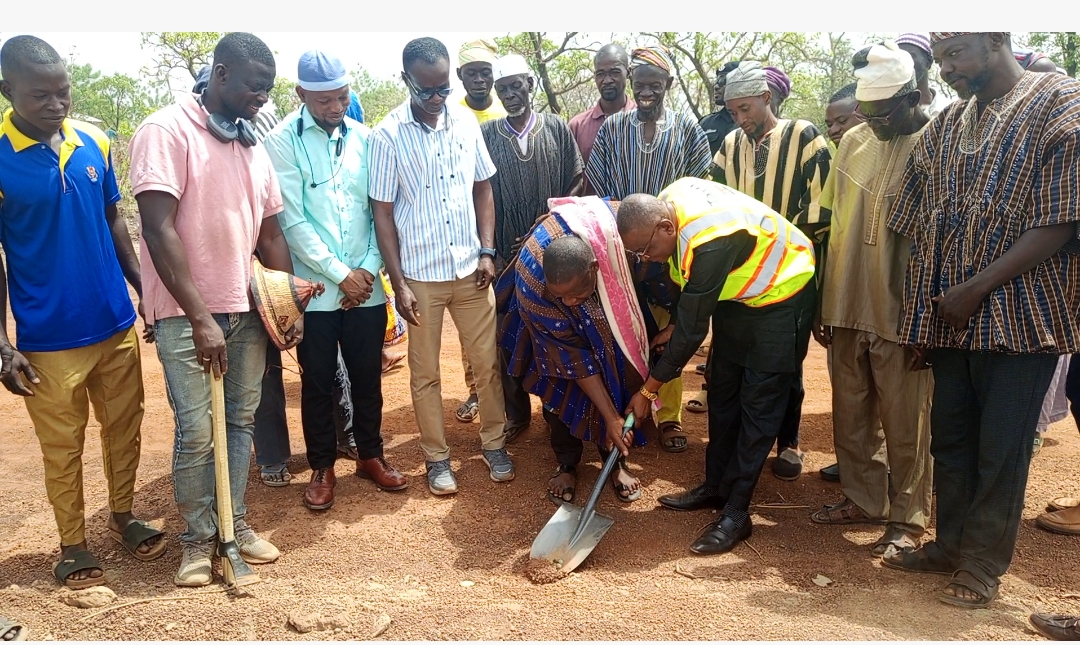
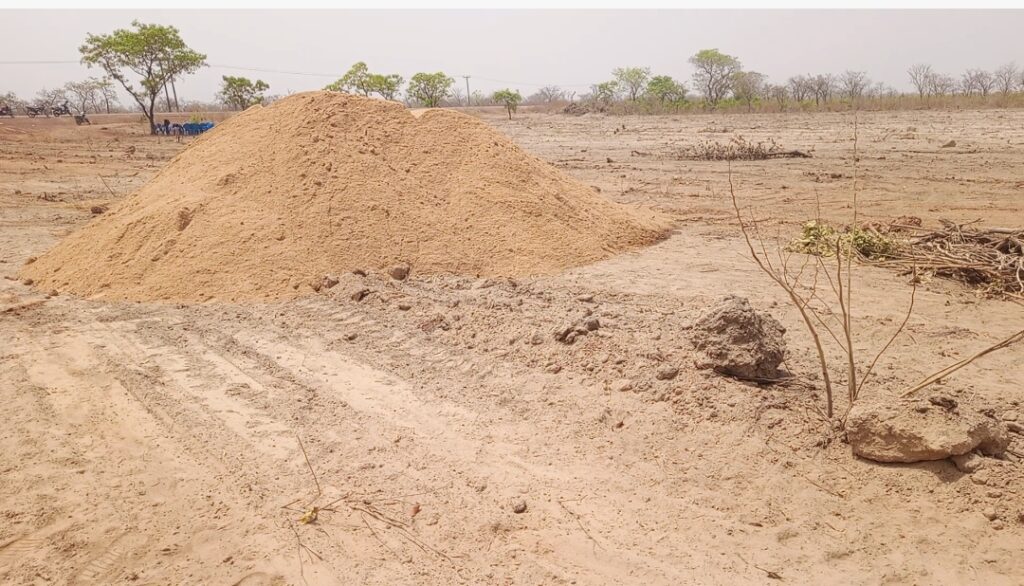
The Mayor of Tamale, Adam Abukari Takoro has cut sod for construction of 6-unit classroom block at Zakaliyili, a farming community under Tamale South Constituency, aimed at increasing access to education and providing educational infrastructure to communities where there are no public schools.

This reflects the wish of the community members as access to basic education has been a challenging one to their kids due to lack of community basic school, resulting to their children trekking several distant kilometers to seek education.

Following the ground breaking ceremony for the commencement of the construction of the 6-unit classroom block on Tuesday 24th February 2026, by the Tamale Mayor, the predicament of the children with school going-age will soon be over as the project is expected to be completed in 8 months’ time.

Hon. Abu Takoro cut the sod on behalf of the Education Minister and MP for Tamale South, Haruna Iddrisu under whose influence the project came to fruition through Ghana Accountability for Learning Outcomes project known as GALOP.
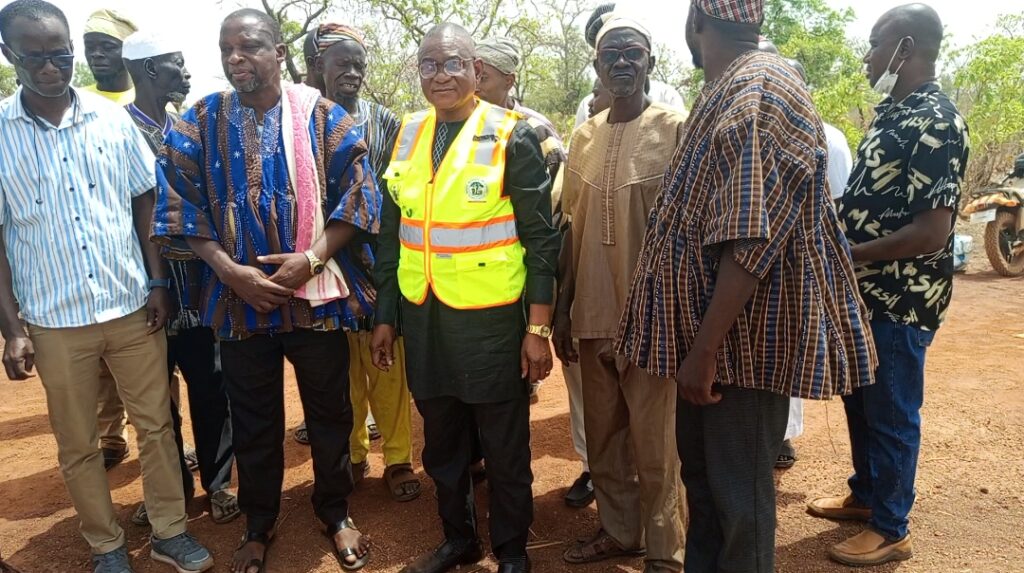
It forms part of shared commitment and responsibility of the MP and the Tamale Mayor not to only increase access to education within the area but to also ensure inclusive education at all stages especially at the basic level.

The Chief and and elders of Zakaliyili joined the Mayor and his team at the project site in the community to break the ground for the work to start in earnest.Also, Accompanying the Mayor for the sod cutting ceremony were officers from the Planning and Engineering department of the Tamale Metro Assembly and other senior staff.

Addressing the Chief and the elders during his courtesy call to the community Palace prior to the ground breaking ceremony, the Mayor urged the community members to collaborate with the contractors for smooth work on site, admonishing them to serve as watchdogs of the project against any theft of construction materials among other forces that can work against the progress of the work.
He also urged the engineers in charge of the project to hire the unskilled labor within the community as laborers for the construction works.

On behalf of the community, the chief expressed his happiness over the project, noting that children who hitherto move to long distances in search of education in other communities will soon heave a sigh of relief now.

Continue Reading
Click to comment

Leave a Reply

Your email address will not be published. Required fields are marked *

News

THERE ARE POLITICAL MACHINATIONS TO DENY NORTHERN REGION A TRUE LEADER FOR UDS – DAGBON YOUTH CHIEFS

Published by Inusah Dondaliya

12th April 2026

The Youth Chiefs of Dagbon have raised serious concerns over selection of a Vice Chancellor to the University of Development Studies, claiming there are clandestine machinations to deny the people of the Northern Region a true person to lead the university.

The Dagbon Youth Chiefs have noted with anxiety that some potential candidates are playing ethnic cards with an excuse that since the establishment of the university their tribe person has never ascended to the high office of the school, describing it as not only hypocritical but dangerous.

In a press release dated today, Sunday 12th April 2026, signed by Secretary to the Youth Chiefs of Dagbon, Andani Yakubu, noted that the appointment of the Vice Chancellor for the University for Development Studies (UDS) presents a defining opportunity to reaffirm the principles of equity, inclusiveness, and context-sensitive leadership within Ghana’s higher education system especially in the Northern sector, overriding political or ethnic considerations.

The group further argues that UDS was uniquely established to advance the development of Northern Ghana through community-based research, practical engagement, and regionally relevant scholarship, stressing that its mandate is inseparable from the socio-cultural and economic realities of the northern regions, emphasizing that Leadership that understands this context is not optional, but fundamental.

The Youth Chiefs also anticipate that UDS will get a leader with strong ties; academic, professional, traditional, or cultural to the region it operates so as to engender peaceful coexistence between these bodies and the academic community in line with the pattern across Ghana’s public universities.

Meanwhile, they further hold the view that appointing a qualified Northern candidate as Vice Chancellor would not only uphold this established institutional logic but also reinforce the founding vision of UDS, explaining that a Northern scholar brings both academic excellence and lived experience, and invaluable combination for navigating the unique development challenges of the region, noting also that such a decision would also send a strong national message that fairness in leadership is not merely symbolic but operational.

Among 10 candidates vying for the Vice Chancellor Position of UDS, 3 candidates have been shortlisted. They include Prof. Mohammed Muniru Iddrisu, Prof. Elliot Haruna Alhassan, Prof. Felix Kofi Abagali.

Information gathered by Ghananewsnet.com shows that Prof. Mohammed Muniru Iddrisu, has the competence, capability and vast experience to occupy the office.

below is the full press release by the Dagbon Youth Chiefs

We, the Youth Chiefs of Dagbon and the Northern Region in general wish to express our support and commendations for the processes leading to the appointment of a new Vice-Chancellor for the University
for Development Studies (UDS).

While commending the processes so far, we are equally aware of the clandestine machinations to deny the people of the Northern Region an opportunity to serve its people as the case is in other sister
universities in northern Ghana and the country as a whole.

We are even more worried as it is widely rumoured that some potential candidates are making a case that since the inception of the university his or their ethnic group has never ascended to the high office of a
vice chancellor. This mindset is not only hypocritical but dangerous. The question we want to ask is: how many ethnic groups do we have in the university? and if the university is going to be subjected to such
baseless ethnic mindset can we ever make a progress?

The appointment of the Vice Chancellor for the University for Development Studies (UDS) presents a defining opportunity to reaffirm the principles of equity, inclusiveness, and context-sensitive leadership within Ghana’s higher education system especially in the Northern sector.

UDS was uniquely established to advance the development of Northern Ghana through community-based research, practical engagement, and regionally relevant scholarship. Its mandate is inseparable from the socio-cultural and economic realities of the northern regions. Leadership that understands this context is therefore not optional, it is fundamental.
Across Ghana’s public university system, there is a noticeable and consistent pattern: institutions often appoint leaders with strong ties; academic, professional, traditional, or cultural to the regions in which they operate so as to engender peaceful coexistence between these bodies and the academic community.

This has been evident in many universities across the country such as the University of Cape Coast, the University of Education, Winneba, and the University of Mines and Technology, where leadership has historically reflected deep familiarity with their institutional and regional
environments. UDS should not departed from this practice since there is evidence to show that it helps to drive development of the university.

Evidence from the University of Business and Integrated Development Studies (UBIDS) and the University of Technology and Applied Sciences (UTAS) all
created out of UDS shows that this practice is entrenched

This practice is grounded in pragmatism, not preference. Leaders who are closely connected to their regions are better positioned to engage local communities, align institutional priorities with regional
development needs, and build trust among the people and all stakeholders.UDS must not be an exception.

Appointing a qualified Northern candidate as Vice Chancellor would not only uphold this established institutional logic but also reinforce the founding vision of UDS. A Northern scholar brings both academic
excellence and lived experience, an invaluable combination for navigating the unique development challenges of the region.Such a decision would also send a strong national message: that fairness in leadership is not merely
symbolic but operational.

It affirms that every region has the capacity and the right to contribute meaningfully to the leadership of institutions designed to serve them.This is not a call for exclusion, but for balance, relevance, and continuity. The future of UDS depends on leadership that is both competent and deeply connected to its mission and region.

At this critical moment, stakeholders are urged to support a decision that reflects equity, strengthens institutional identity, and advances the developmental mandate of the University for Development
Studies.

The Zaachi Youth Association have maintained a very cordial and a positive relationship with the University management over the years and we do not wish this relationship to turn sour.
However, youth groups across the region are already in high alert to resist any attempt by any individual, group, or institution that seeks to deny the people of the Northern Region this
opportunity to serve its people.

LONG LIVE UDS, LONG LIVE THE PEOPLE OF THE NORTH

Continue Reading

News

DSP Jalil Bawah hands over IGP’s Special Operations team Command to Superintendent Augustine

Published on 8th April 2026

The outgoing leader of the IGP’s Special Operations team, DSP Bawah Abdul Jalil, has officially handed over command responsibilities to the new Commander, Superintendent Augustine Dawson Amoah who will be supported by three other senior officers.

At a formal handing-over ceremony which was held at the National Police Training School in Accra on 7th April 2026, to mark a change in leadership of the IGP Special Operations Team, DSP Jalil gave his word to the team.

In his remarks, DSP Bawah Abdul Jalil urged personnel to give their full cooperation and support to the new leadership to ensure continuity and operational effectiveness.

On his part, Superintendent Augustine Dawson Amoah, in his address, assured the team of his commitment to effective leadership and called for unity, discipline, and professionalism in the execution of their duties.

Source: Ghana Police

Continue Reading

News

Missing AFCON 2025 Was The First Warning Shot. Will The Black Stars Rise, Or Will History Repeat Itself? – Ras Mubarak queries

The night of 30th March 2026 will be remembered in Ghana not for celebration, but for the sharp crack of a guillotine. Hours after the Black Stars fell 2-1 to Germany in Stuttgart, their fourth straight friendly defeat, following a humiliating 5-1 thrashing by Austria, the Ghana Football Association dropped the bomb: Otto Addo was out.

No long press conference. No detailed autopsy. Just a terse statement thanking the man who had just guided Ghana to the 2026 World Cup, then wishing him well.

It was the kind of swift, emotional decision that has defined Ghanaian football for decades. Passionate fans demanded blood after those heavy losses. The FA delivered it.

But as the dust settles and the tournament in North America looms just 71 days away, one question hangs heavier than the humid Harmattan air: was this the move that saves the Black Stars… or the one that sinks them?

Let’s be honest, this squad has always been a paradox. From the golden generation of the 2000s to the current crop of Premier League stars, the Black Stars possess the raw materials to trouble any team on their day. They topped their 2026 World Cup qualifying group with authority. Addo became the first coach to qualify Ghana twice. The talent pipeline is still flowing.

Yet the same old ghosts haunt them. Defensive fragility. Tactical rigidity in big moments. A habit of collapsing against organised, high-pressing European sides in pre-tournament friendlies. Missing the 2025 Africa Cup of Nations, the first time in 20 years, was the warning shot.

The recent friendlies were the execution. The team looked disjointed, unsure, almost apologetic on the pitch. For a nation that lives and breathes football, that stings deeper than any scoreline.

The Ghana Football Association finds itself once again in the eye of the storm it helped create. Otto Addo’s record (22 games, 8 wins, 5 draws, 9 losses) was never perfect, but it delivered the one thing that matters most: a ticket to the World Cup.

The timing of his dismissal, right on the cusp of the tournament, raises eyebrows. Was this about results, or about appeasing the loudest voices in the stands and on social media?

Ghanaian football has a well-worn script: poor run of games, public outcry, coach sacked, new saviour hired, repeat. The FA has pulled this lever so often that instability has become the only constant.

Players arrive for camps wondering who will be in charge next month. Technical staff inherit half-baked squads and rushed tactics. And every time, the same administrators who appointed, supported (or failed to support) the coach walk away unscathed.

This is not just about one sacking. It is about a pattern that has turned potential into perpetual “what ifs.”

The 2026 World Cup is no longer a distant dream, it is 11 June away. Ghana still has friendlies lined up against Mexico and Wales in May. A new coach (rumours already swirl around names like Walid Regragui) will have mere weeks to:
(I) Drill defensive organisation that has leaked like a sieve.

(II) Forge chemistry among a squad of global stars who rarely play together.

(III) Finalize a 26-man roster under immense pressure.

(IV) Inject belief into a team that has just been told its leader wasn’t good enough.
This is not preparation. This is crisis management wearing a national jersey.

Sacking Addo is done. Regret changes nothing. The only question that matters is what comes next. Here is the roadmap Ghana must follow if the Black Stars are to write a new chapter instead of another tragic verse:

1. Appoint with urgency and vision, not panic. The next coach cannot be a short-term firefighter. He must be a proven tournament performer who can hit the ground running. Give him real authority over squad selection and tactics. No more committee interference.

2. Turn the remaining friendlies into laboratories. Use Mexico and Wales matches to test systems, not to chase results. Experiment boldly. Build the starting XI that will face the group stage in June.

3. Demand FA accountability – publicly and structurally. Fans and media must keep the heat on the administrators. Why were defensive weaknesses allowed to fester? Why were preparation camps and logistics not world-class? The FA should release a transparent post-mortem and commit to long-term reforms: youth academy overhaul, domestic league investment, and player welfare protocols that actually work.

4. Unite the family. Bring back senior players as leaders. Create a technical advisory panel that includes past legends. Ghanaian football thrives when it feels like a national mission, not a boardroom power play.

5. Embrace the pressure. The Black Stars have always performed when the world doubts them. This is not the time for fear; it is the time for the famous Ghanaian never-say-die spirit that once made the world stand up and take notice.

The sacking of Otto Addo was understandable in the heat of the moment. Whether it was wise will be judged not by headlines today, but by how Ghana performs when the World Cup whistle blows in June.

The talent is there. The passion has never left. The only missing piece is stability, strategy, and the courage to break the cycle.

The nation, and the entire Black Stars family are watching. The clock is ticking. This is not just another coaching change, it is a moment of truth for Ghanaian football.

Will the Black Stars rise, or will history repeat itself? The answer starts now.

Continue Reading