News
Hardi Pagazaa Clarifies Dagban’s Eid Tradition: ‘It Is Naa Jingli, Not Bugu Chugu’

Details
Published May 31 2026
Published at: 12:26Pm
Story by Saibu Terry
A Dagbon cultural advocate, Hardi Pagazaa, has sought to clarify misconceptions surrounding the ceremonial Eid celebrations performed by the Overlord of Dagbon, Ndan Yaa-Naa, emphasizing that the event is historically known as Naa Jingli and not “Buga Chugu” as widely portrayed on social media.

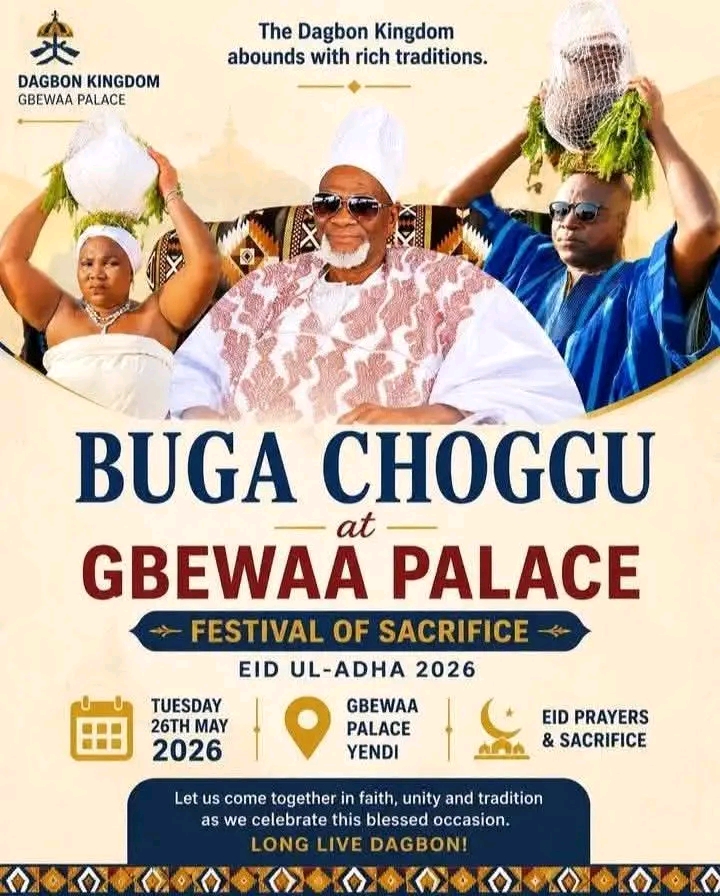
According to Pagazaa, several videos circulating online have been captioned as “Buga Chugu,” which some have interpreted as a “small gods festival.” He insists that no such festival exists in Dagbon and describes the characterization as historically inaccurate.
He explained that Naa Jingli is a centuries-old ceremonial tradition dating back to the reign of Naa Zanjina, the 17th Yaa-Naa of Dagbon, who is credited with introducing and publicly embracing Islam in the kingdom around the 15th century.


The ceremony commemorates the historic moment when Naa Zanjina accepted Islam and publicly performed prayers for the first time. Since then, Islam has remained deeply woven into the fabric of Dagbon’s traditional governance and culture.
Pagazaa noted that it is obligatory for the Yaa-Naa and paramount chiefs across Dagbon to observe at least the Eid prayers. This enduring relationship between traditional authority and Islam is reflected in the construction of mosques near palaces throughout Dagbon and the enskinment of Imams within the traditional leadership structure.


He further explained that the ceremonial Eid-ul-Adha observance traditionally takes place in the evening. Historically, the Yaa-Naa appeared at the prayer grounds dressed in full war regalia. According to him, this practice was permitted by Islamic scholars and Imams of the time as a security measure against potential attacks from rival groups, which were common during that era.
Over time, however, as Islam became more firmly established in Dagbon, the Yaa-Naa reportedly abandoned the use of war attire during prayers and directed other traditional leaders to do the same.
Pagazaa also highlighted the unique and revered position of the Imam in Dagbon society. He stated that, apart from the President of Ghana, the Imam is the only individual accorded the privilege of shaking hands with the Yaa-Naa, underscoring the spiritual significance of the office.

He said the continued observance of Naa Jingli serves as a powerful lesson in peaceful coexistence, demonstrating how respect for culture, patience, and sustained engagement can foster religious acceptance and social harmony.
The clarification comes amid growing public interest in Dagbon’s cultural and religious traditions, particularly following the circulation of videos from recent Eid celebrations involving the Yaa-Naa.
“Long reign Ndan Yaa-Naa. Long live Dagbon. Long live Ghana,” Pagazaa concluded.