Publish on May 25th 2025
In many low-income communities, illiteracy remains a barrier to opportunity, particularly, for parents who never had access to formal education in northern Ghana. These challenges make it difficult for them to support their children’s learning. Some families also face language barriers, where parents speak a different language from the one used in schools, creating further disconnection.
To address this issue, My Book Buddy (MBB) launched a literacy initiative to empower low-literate and illiterate parents. The mission is equipping parents with basic literacy skills so they can actively support their children’s education, strengthen family ties, and engage more confidently in community life.
Literacy as a Foundation
Literacy is more than the ability to read—it’s a tool for unlocking economic, social, and personal potential. Literate parents serve as role models and are more capable of engaging with schools, helping their children succeed academically. Without literate support at home, children often face educational disadvantages, struggling with homework and lacking access to books or rich language environments.
My Book Buddy bridges this gap by integrating home-based reading into its literacy program, helping families build a strong reading culture among parents and children respectively.
Shared Reading: A Cornerstone of the Approach
At the heart of MBB’s model is shared reading, where children bring books home to read with their parents. This strategy is inclusive based learning where children support their parents’ learning, and parents are introduced to literacy in a natural, supportive setting. Unlike formal adult education programs, shared reading is woven into daily routines and supported by schools, making it a low-pressure and emotionally rewarding experience.
How the Programme Works
Implemented in schools with MBB libraries, the program involves three main stakeholders:
Parents: Often with little or no literacy, parents are encouraged to participate in shared reading at home.
Children: They benefit from improved access to letter cards and story books and play an active role in helping their parents read.
Teachers: As facilitators, teachers monitor progress, provide guidance, and encourage continued parent-child engagement off school instructional hours.
This triangular model fosters a collaborative, supportive learning environment where home and school are aligned in the child’s education.
Literature
The My Book Buddy project is a community-driven literacy initiative aimed at closing the learning gap between home and school. The program is founded on the understanding that early access to books and active family involvement are essential to developing children’s literacy skills. At the core of the initiative is the provision of portable bookcases—known as book buddies—filled with engaging storybooks that children can borrow and read at home. By encouraging shared reading between children and their caregivers, My Book Buddy promotes a culture where reading becomes a collaborative, enjoyable, and meaningful family activity.
Extensive research supports the positive impact of parental involvement on children’s academic success (Hoover-Dempsey & Sandler, 1997; Epstein, 2001). However, in many low-income areas, especially in Northern Ghana, high illiteracy rates among parents hinder their ability to participate in their children’s learning. My Book Buddy tackles this barrier by encouraging reading partnerships, even when parents have limited literacy skills. This inclusive approach strengthens the parent-child bond, builds children’s confidence, and transforms the home into a nurturing learning environment.
The program also empowers teachers to serve as literacy facilitators. They provide guidance, track progress, and organize literacy-centered activities that reinforce the shared reading culture. A successful pilot at Best Star School Complex in Tamale South showcased increased reading fluency, stronger family engagement, and improved educational outcomes.
This programme stands out as a cost-effective, scalable, and sustainable model for improving literacy. By harnessing existing school infrastructure, community involvement, and the natural bond between parents and children, the project nurtures a love of reading and learning. Ultimately, My Book Buddy is not just about building reading skills—it’s about creating empowered families and communities that value and support education as a shared responsibility.
Pilot School Overview: Best Star School Complex Primary Kakpagyili, Tamale South
The pilot implementation of the program began in Best Star School Complex Primary School, with 62 pupils and their 62 parents of which majority of the parents are illiterates. These parents and the children successfully completed their training and received certificates during the ceremony marking their journey from non-readers to readers. This milestone has sparked enthusiasm and pride among participants, highlighting the potential of the model.
Key Outcomes of the Programme
- Improved Literacy Skills: Both children and parents improved their reading capabilities, resulting in better academic performance and personal growth.
- Strengthened Family Bonds: Shared reading created meaningful parent-child interactions.
- Greater Enthusiasm for Learning: Families became more engaged and supportive of school activities.
- A Culture of Reading: It sparks a reading culture not only in homes but across the community and beyond.
- Parental Empowerment: Parents gained confidence and pride from learning and contributing to their children’s education.
- Positive Peer Influence: Children encouraged each other, fostering motivation and mutual support.
Lessons for Scaling Up
The pilot has yielded valuable lessons and among them include:
Each child and parent should have their own letter cards to ensure focused practice.
Integrating alphabet and letter cards enriches the learning experience.Teacher visits to homes for monitoring significantly enhance progress.
Literacy activities like word games and competitions boost interest and reinforce learning.Teachers need motivation and recognition for their efforts in literacy outreach.
The Role of Local Leadership
Mr. Ibrahim Nshinmi Iddrisu, a former headteacher at Vittin Ansuariya Primary School and currently a Senior Tutor at the Tamale College of Education, has played a pivotal role in the development of the My Book Buddy (MBB) program and in advancing education more broadly. Widely recognized by teachers as a true champion of literacy, his collaboration with Mr. Rene eventually connected him to Madam Carthy, the Director of MBB. This partnership led to the launch of the first school-based MBB initiative in 2012.
Since then, the program has expanded to over twenty schools across the Northern and North East Regions of Ghana. Today, Mr. Ibrahim Nshinmi Iddrisu, serves as the national coordinator for MBB, receiving expressions of interest from headteachers and community stakeholders forwarding them to the Programme Director in the Netherlands for consideration.
Following the well-attended 2024 stakeholder conference—which received significant media coverage—interest in the MBB program has grown considerably. Mr. Ibrahim Nshinmi Iddrisu reports that many headteachers in and around Northern Region are now actively submitting applications to bring the initiative to their schools.
Teaching the Alphabet in MBB
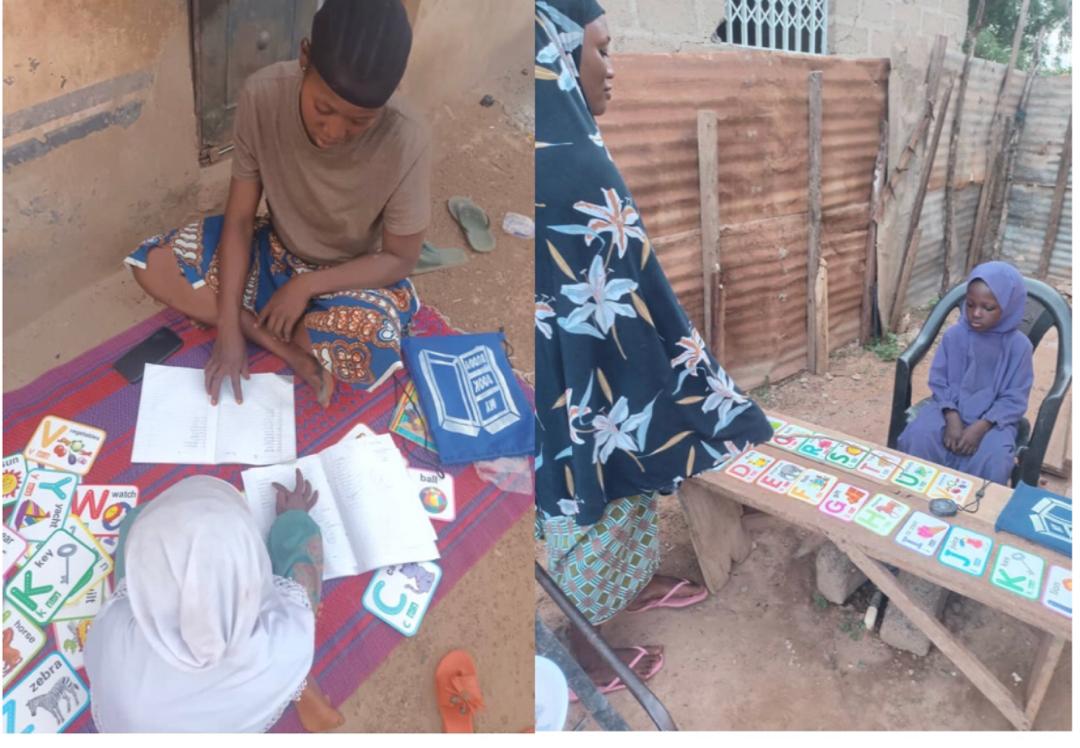
Teachers use MBB-provided materials like letter or alphabet cards to introduce and reinforce phonics. Strategies included:
Matching letters with sounds and pictures (e.g., A for Apple, B for Ball,).Using hands-on games like alphabet bingo and letter hunts.
Singing songs and rhymes to memorize letter sounds.
Tracing and drawing letters during class.Linking classroom reading with books sent home for family reading practice.
Teachers also support parents by showing them how to help children practice letter recognition at home. Each participant receives their own set of materials to ensure effective learning.
Monitoring and Feedback (Teachers) Conduct regular home visits when feasible, track students ‘reading milestones and encourage children to share feedback through:
Reflection sessions during class. Drawing or writing simple reading reports.Filling out reading logs with smiley faces or short notes.
Speaking about their home reading experiences during school events or storytelling time.
Feedback is also gathered during Parent Engagement Days and through teacher monitoring visits, where both children and parents reflect on their reading journey for teacher to make inputs.
Children’s Experiences
Children involved in the MBB program report several meaningful experiences:
Joy of Reading: For many, these are their first personal books.
Family Connection: Shared reading at home becomes treasured activity and interesting session.
Boosted Confidence: Children feel proud of their ability to help their parents or speak about books.
Expanded Worldview: Storybooks introduce new vocabulary, cultures, and ideas.
Fun Learning: Activities like reading games and storytelling contests make learning enjoyable.
Recognition: Competitions and reading milestones give children a sense of achievement.
Encouraging Environment: Teachers and parents alike celebrate progress, encouraging continued effort.
These experiences foster a lifelong love of reading, improve classroom performance, and enhance social-emotional development.
A Simple Yet Transformative Model Its strength lies in its simplicity and sustainability. Without relying on high-tech tools or expensive infrastructure, the program leverages:
Existing school libraries, The natural parent-child bond and Teachers as literacy facilitators.
This approach protects the dignity of adult learners by avoiding formal classrooms and instead encouraging learning through shared experiences. The result is lasting transformation. Literacy becomes a family value, passed from one generation to the next.
Conclusion:
The My Book Buddy project does more than teach reading—it rewrites futures. When parents learn to read, they model lifelong learning. When children witness their parents’ progress, they become more motivated. And when communities come together to promote literacy, they build stronger, more resilient futures.
This initiative offers an inclusive, respectful, and effective path to breaking the cycle of illiteracy. It begins not in the classroom, but in the heart of the home.
Let your parents read—because when they do, they begin writing a brighter future.
The My Book Buddy (MBB) initiative uses shared reading to empower illiterate and low-literate parents, helping them support their children’s education while fostering a culture of reading at home. Through its pilot at Best Star School Complex primary School in Tamale South, 62 parents successfully learned to read storybooks with their children, strengthening family bonds and boosting literacy across generations. Based on the success of this pilot and growing requests from other schools, an indication of the need to expand the programme to cover more schools in the country, particularly MBB beneficiary schools to enable the children use the stocked story books in the libraries.
Compiled by: Mr. Victor Yakubu At Tamale College of Education