Connect with us

News

Parliament approves Baffoe-Bonnie as Chief Justice
Details

Published 13 November 2025

Source TV3

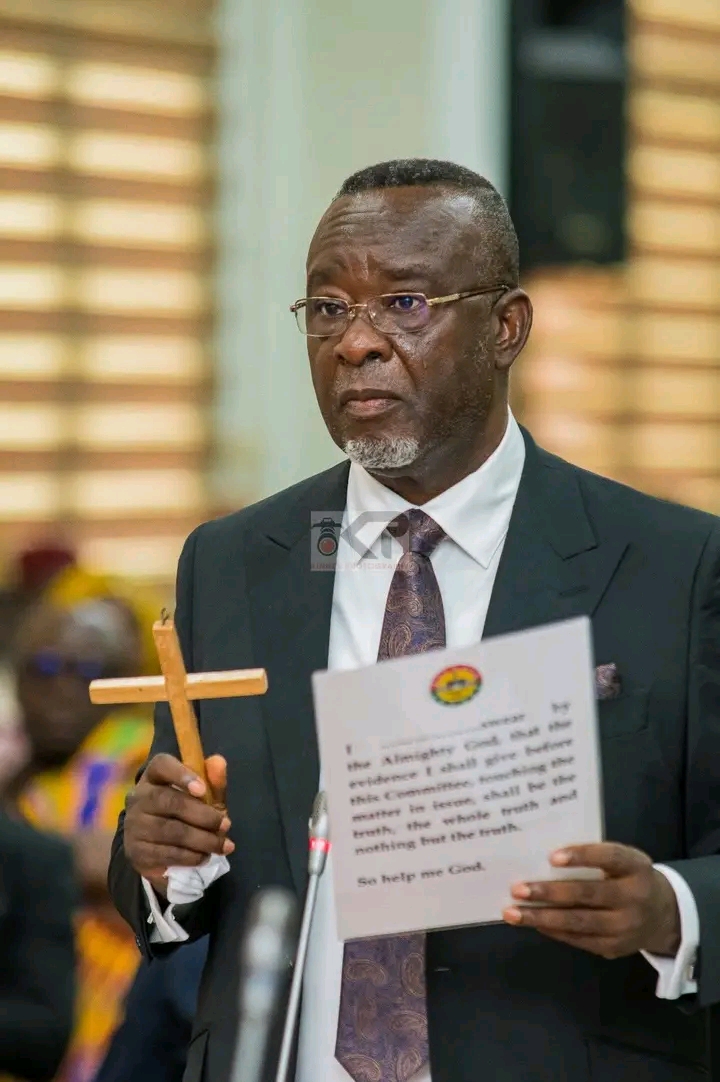
CJ nominee, Justice Paul Baffoe-Bonnie.

Parliament has, through a head count, approved the nomination of Justice Paul Baffoe Bonnie as the Chief Justice of the Republic of Ghana.

Tap Here To Add 3News As A Trusted Source

Parliament approved him on Thursday, November 13. 163 members of the Majority were counted while the Minority recorded 69 members.

“I urge the nominee to take all that has been happening, from the nomination to the approval, into consideration in his tenure of office,” the Speaker said after the approval on Thursday.

Prior to the ehadcount, the Minority Leader, Alexander Afenyo-Markin, had pushed for a secret ballot for the approval or otherwise of the Chief Justice nominee, Justice Paul Baffoe-Bonnie.

He made the point that there are some members of the Majority who even have problems with the nomination of Baffoe-Bonniee, so they will want to express that in a secret ballot.

“We leave everything to posterity, everything we witness is for posterity…we are going to demand a secret ballot to vote on this [approval of Baffoe-Bonnie’s nomination]. We know there are members on their side who have their own views and want to express them when there is a secret ballot,” he said in Parliament on Thursday, November 13.

Afenyo-Markin also said that the fact that the prima facie case against the former Chief Justice Gertrude Torkornoo remains unpublished by the government is a concern to the Minority.

He made the point that this is one of the reasons the Minority cannot support the nomination and approval of Justice Paul Baffoe-Bonnie as Chief Justice.

“As we speak, the prima facie case against Torkornoo hasn’t been published. The fact that it hasn’t been published is of concern to us,” Afenyo-Markin said.

He added, “The fact that the recommendation that gave rise to the president’s actions is not public is of concern to us…The fact that there appears to be some rights violations of Gertrude Torkornoo, we in the Minority are unable to support this nomination.”

For his part, the Member of Parliament for Asante Akim Central, Kwame Anyimadu-Antwi,  has told Parliament that the Minority opposed the nomination of Justice Paul Baffoe-Bonnie as Chief Justice because there are cases in courts challenging the removal of the former Chief Justice Gertrude Torkornoo, including the ECOWAS court.

He wondered what would happen to the approval of Justice Baffoe-Bonnie if the ECOWAS court rules on the cases and it does not go in favour of the government.

“We indicated to the committee that we were going to vote against the nominee. There are seven separate proceedings at the various jurisdictions, inclusive of the High Court, Supreme Court and ECOWAS courts. Ghana is a member of ECOWAS and a very serious member. Under ECOWAS, we have the ECOWAS parliament and court, and we must respect the court. What will happen if all these pending cases in the court they decided, and it goes against the government,” he told Parliament after the Appointments Committee of Parliament, by a Majority decision, recommended for the approval by Parliament, the Chief Justice nominee.

Chair of the committee Bernard Ahiafor told the house on Thursday that Baffoe-Bonniee demonstrated deep knowledge of the law during his vetting.

“The nominee demonstrated outstanding competence, deep knowledge of the law and a firm grasp of the judicial ethics. He addressed questions posed by the committee with professionalism, clarity and intellectual rigour. The nominee possesses the requisites of qualification.”

Justice Baffoe-Bonnie, the nominee for the office of Chief Justice, appeared before Parliament’s Appointments Committee on Monday, November 10, affirming his qualifications and readiness to lead the Judiciary into an era of renewed confidence and transparency.

The vetting began with controversy when the Minority Leader, Alexander Afenyo-Markin, described Justice Baffoe-Bonnie as a “disputed nominee”.

“We gather to vet the disputed nominee for the office of Chief Justice. This is a case of whether Ghana’s judiciary will remain independent,” Afenyo-Markin stated in his introductory remarks.

The comment drew an immediate objection from the Majority Leader, Maham Ayariga, who insisted, “I am objecting to the term dispute because there is no dispute regarding the nominee before us”.

But in his opening remarks, Justice Baffoe-Bonnie acknowledged the task ahead, which he described as “marked by public skepticism, institutional fatigue, and a growing demand for justice”.

“The Judiciary of Ghana stands at a defining moment. As I appear before you today to be vetted by Parliament, I do so fully aware that this process is not merely a constitutional requirement—it is a national reckoning,” the nominee stated.

He pledged that, subject to his endorsement, he would not merely preserve the Judiciary’s legacy but would actively renew it. “The nation needs a judiciary that does not merely interpret the law; but elevates the nation’s conscience,” he said, vowing to “restore confidence in our judiciary and leave it stronger than I found it”.

Three Pillars of Transformation

Justice Baffoe-Bonnie outlined a comprehensive strategy for judicial transformation anchored on three core pillars:

Procedural Clarity & Predictability: This involves establishing publishable rules and timelines for everything from how cases are assigned to how they are managed.

Efficiency & Accountability: This will be achieved by adopting technology, performance targets, and dashboards to ensure “justice is delivered, not assumed”.

Open Justice: He proposed appropriate streaming, public summaries, and structured communication so that citizens “see the work of the Court, not just its verdicts”.

CJ nominee, Justice Paul Baffoe-Bonnie.

He also pledged to lead an era of greater transparency, efficiency, and accessibility, ensuring that access to justice “should not depend on who you are or your connections“. His task, he concluded, is to ensure the law “remains both a shield for the weak and a restraint upon the powerful”.

Lending support to the nominee was Court of Appeal Judge Yaw Oppong, who was present in Parliament. Oppong expressed confidence that Justice Baffoe-Bonnie was fully prepared for the process.

“Justice Baffoe-Bonnie has been a Justice of the Supreme Court, from the High Court, Court of Appeal to the Supreme Court for many years. I am certain that he knows the relevant provisions, and he knows what is expected of him,” Oppong told TV3.

He added that since the nominee had been previously vetted as a Supreme Court judge, “he is a veteran in this area”.

Continue Reading
Click to comment

Leave a Reply

Your email address will not be published. Required fields are marked *

News

Playoff: Step onto the pitch as warriors not participants – Ibrahim Gagbuni to Tamale City

published by Inusah Dondaliya

15th April 2026

Astute Ghanaian Football Administrator based in UK, Mr. Ibrahim Gagbuni has a word of encouragement for Tamale City following the team’s qualification to play in the playoff against Debibi United.

Mr. Gagbuni underscored the team’s discipline, grit, and collective resolve, emphasizing that Tamale City has raised the flag of Northern region high.

”Hats off to Tamale City for sealing your playoff spot a testament to discipline, grit, and collective resolve. You’ve raised the flag of the Northern Region with pride”.

The bankroller of FC Tamale also warns the team against complacency going into the playoff, advising that the players should go into match as warriors but not just participants.

“No room for complacency only hunger. Step onto that pitch as warriors, not participants”.

Below is his full statement

Official message from
Ibrahim Gagbuni

Hats off to Tamale City for sealing your playoff spot a testament to discipline, grit, and collective resolve. You’ve raised the flag of the Northern Region with pride. Now, the ultimate test awaits.

This playoff isn’t just a match; it’s a statement of readiness for the Premier League. Carry the same defensive solidity, attacking intelligence, and unwavering belief that brought you here. Every tackle, every pass, every goal must echo your ambition. Congratulations to the entire Tamale city team .

No room for complacency—only hunger. Step onto that pitch as warriors, not participants. The city, the fans, and Ghana football are watching. Go silence the doubters and claim what’s yours: Premier League qualification.

Rise, Tamale City. Rise and conquer.

Continue Reading

News

THERE ARE POLITICAL MACHINATIONS TO DENY NORTHERN REGION A TRUE LEADER FOR UDS – DAGBON YOUTH CHIEFS

Published by Inusah Dondaliya

12th April 2026

The Youth Chiefs of Dagbon have raised serious concerns over selection of a Vice Chancellor to the University of Development Studies, claiming there are clandestine machinations to deny the people of the Northern Region a true person to lead the university.

The Dagbon Youth Chiefs have noted with anxiety that some potential candidates are playing ethnic cards with an excuse that since the establishment of the university their tribe person has never ascended to the high office of the school, describing it as not only hypocritical but dangerous.

In a press release dated today, Sunday 12th April 2026, signed by Secretary to the Youth Chiefs of Dagbon, Andani Yakubu, noted that the appointment of the Vice Chancellor for the University for Development Studies (UDS) presents a defining opportunity to reaffirm the principles of equity, inclusiveness, and context-sensitive leadership within Ghana’s higher education system especially in the Northern sector, overriding political or ethnic considerations.

The group further argues that UDS was uniquely established to advance the development of Northern Ghana through community-based research, practical engagement, and regionally relevant scholarship, stressing that its mandate is inseparable from the socio-cultural and economic realities of the northern regions, emphasizing that Leadership that understands this context is not optional, but fundamental.

The Youth Chiefs also anticipate that UDS will get a leader with strong ties; academic, professional, traditional, or cultural to the region it operates so as to engender peaceful coexistence between these bodies and the academic community in line with the pattern across Ghana’s public universities.

Meanwhile, they further hold the view that appointing a qualified Northern candidate as Vice Chancellor would not only uphold this established institutional logic but also reinforce the founding vision of UDS, explaining that a Northern scholar brings both academic excellence and lived experience, and invaluable combination for navigating the unique development challenges of the region, noting also that such a decision would also send a strong national message that fairness in leadership is not merely symbolic but operational.

Among 10 candidates vying for the Vice Chancellor Position of UDS, 3 candidates have been shortlisted. They include Prof. Mohammed Muniru Iddrisu, Prof. Elliot Haruna Alhassan, Prof. Felix Kofi Abagali.

Information gathered by Ghananewsnet.com shows that Prof. Mohammed Muniru Iddrisu, has the competence, capability and vast experience to occupy the office.

below is the full press release by the Dagbon Youth Chiefs

We, the Youth Chiefs of Dagbon and the Northern Region in general wish to express our support and commendations for the processes leading to the appointment of a new Vice-Chancellor for the University
for Development Studies (UDS).

While commending the processes so far, we are equally aware of the clandestine machinations to deny the people of the Northern Region an opportunity to serve its people as the case is in other sister
universities in northern Ghana and the country as a whole.

We are even more worried as it is widely rumoured that some potential candidates are making a case that since the inception of the university his or their ethnic group has never ascended to the high office of a
vice chancellor. This mindset is not only hypocritical but dangerous. The question we want to ask is: how many ethnic groups do we have in the university? and if the university is going to be subjected to such
baseless ethnic mindset can we ever make a progress?

The appointment of the Vice Chancellor for the University for Development Studies (UDS) presents a defining opportunity to reaffirm the principles of equity, inclusiveness, and context-sensitive leadership within Ghana’s higher education system especially in the Northern sector.

UDS was uniquely established to advance the development of Northern Ghana through community-based research, practical engagement, and regionally relevant scholarship. Its mandate is inseparable from the socio-cultural and economic realities of the northern regions. Leadership that understands this context is therefore not optional, it is fundamental.
Across Ghana’s public university system, there is a noticeable and consistent pattern: institutions often appoint leaders with strong ties; academic, professional, traditional, or cultural to the regions in which they operate so as to engender peaceful coexistence between these bodies and the academic community.

This has been evident in many universities across the country such as the University of Cape Coast, the University of Education, Winneba, and the University of Mines and Technology, where leadership has historically reflected deep familiarity with their institutional and regional
environments. UDS should not departed from this practice since there is evidence to show that it helps to drive development of the university.

Evidence from the University of Business and Integrated Development Studies (UBIDS) and the University of Technology and Applied Sciences (UTAS) all
created out of UDS shows that this practice is entrenched

This practice is grounded in pragmatism, not preference. Leaders who are closely connected to their regions are better positioned to engage local communities, align institutional priorities with regional
development needs, and build trust among the people and all stakeholders.UDS must not be an exception.

Appointing a qualified Northern candidate as Vice Chancellor would not only uphold this established institutional logic but also reinforce the founding vision of UDS. A Northern scholar brings both academic
excellence and lived experience, an invaluable combination for navigating the unique development challenges of the region.Such a decision would also send a strong national message: that fairness in leadership is not merely
symbolic but operational.

It affirms that every region has the capacity and the right to contribute meaningfully to the leadership of institutions designed to serve them.This is not a call for exclusion, but for balance, relevance, and continuity. The future of UDS depends on leadership that is both competent and deeply connected to its mission and region.

At this critical moment, stakeholders are urged to support a decision that reflects equity, strengthens institutional identity, and advances the developmental mandate of the University for Development
Studies.

The Zaachi Youth Association have maintained a very cordial and a positive relationship with the University management over the years and we do not wish this relationship to turn sour.
However, youth groups across the region are already in high alert to resist any attempt by any individual, group, or institution that seeks to deny the people of the Northern Region this
opportunity to serve its people.

LONG LIVE UDS, LONG LIVE THE PEOPLE OF THE NORTH

Continue Reading

News

DSP Jalil Bawah hands over IGP’s Special Operations team Command to Superintendent Augustine

Published on 8th April 2026

The outgoing leader of the IGP’s Special Operations team, DSP Bawah Abdul Jalil, has officially handed over command responsibilities to the new Commander, Superintendent Augustine Dawson Amoah who will be supported by three other senior officers.

At a formal handing-over ceremony which was held at the National Police Training School in Accra on 7th April 2026, to mark a change in leadership of the IGP Special Operations Team, DSP Jalil gave his word to the team.

In his remarks, DSP Bawah Abdul Jalil urged personnel to give their full cooperation and support to the new leadership to ensure continuity and operational effectiveness.

On his part, Superintendent Augustine Dawson Amoah, in his address, assured the team of his commitment to effective leadership and called for unity, discipline, and professionalism in the execution of their duties.

Source: Ghana Police

Continue Reading