Connect with us

News

Ras Mubarak writes: Africa must unite to dismantle visa barriers
Details

Published : Tuesday July 22 2025

Published: 6:10Am

As we count down to the start of the Trans African Tourism and Unity Campaign, we face a sobering reality. Our team of 12 Ghanaians, four of whom are media crew from Ghana Television, will spend $11,520 in visa fees to travel across 39 African countries.

This staggering cost, just to move freely on our own continent, – our own homeland – is a painful reminder of the colonial borders that still divide us. As a friend recently remarked, “Why must I pay to visit my brother in another neighborhood?” Even capitalist Europe has largely abandoned visas for EU members, yet Africa remains shackled by bureaucratic hurdles.

With our media launch 22 days away on August 11, 2025, and our 120-day journey starting August 18, 2025, from Accra, Ghana, I am compelled to speak out.

Africa must unite. And it must start now, by rallying behind our campaign to dismantle visa barriers and forge a borderless, and prosperous continent.

This journey is personal to me. As a Ghanaian patriot, a pan-Africanist, and a former parliamentarian, I’ve long believed in the vision of Kwame Nkrumah and Julius Nyerere – a united Africa where our 1.4 billion people can travel, trade, and connect without hindrance.

As we count down to the start of the Trans African Tourism and Unity Campaign, we face a sobering reality. Our team of 12 Ghanaians, four of whom are media crew from Ghana Television, will spend $11,520 in visa fees to travel across 39 African countries.

This staggering cost, just to move freely on our own continent, – our own homeland – is a painful reminder of the colonial borders that still divide us. As a friend recently remarked, “Why must I pay to visit my brother in another neighborhood?” Even capitalist Europe has largely abandoned visas for EU members, yet Africa remains shackled by bureaucratic hurdles.

With our media launch 22 days away on August 11, 2025, and our 120-day journey starting August 18, 2025, from Accra, Ghana, I am compelled to speak out.

Africa must unite. And it must start now, by rallying behind our campaign to dismantle visa barriers and forge a borderless, and prosperous continent.

Our campaign, endorsed by the Government of Ghana through the Ministry of Foreign Affairs, is a selfless step toward that dream. We will drive 600 hours, traversing 39 nations, from Algeria’s deserts to Zimbabwe’s plains, with the view to meeting heads of state, policymakers, and communities to advocate for visa-free policies, aligned with the African Union’s Agenda 2063 and the Protocol on the Free Movement of Persons.

Yet, the $14,520 visa fee burden we face exposes the deep fractures in our continent’s travel policies. Historically, visas and their fees emerged from colonial powers’ need to control movement and extract revenue, a legacy that persists today.

Ghana’s December 2024 decision to grant visa-free access to all African nationals (though yet to be fully implemented) and Kenya’s groundbreaking move to to give all Africans, save Libyans and Somalis completely visa free access, will open doors, likely securing reciprocal access.

In spite of Ghana’s Pan Africa gesture, several countries still impose costly requirements for not only Ghanaians but for other African nationals.

Our team has to cough up $7,800 for embassy visas for Equatorial Guinea, DRC, Mozambique, Namibia, Algeria and Angola; eVisas for Central African Republic, Chad, and Botswana add $3,600; ETAs for South Africa and Mauritania cost $1,200; and The Gambia and Republic of Congo’s tourism levy and visa-on-arrival fees add $1,920, bringing the visa related cost to $14,520.

These costs are a stark barrier to the free movement that could boost intra-African trade by 109% by 2035 under the African Continental Free Trade Area (AfCFTA)

This $14,520 is not just a financial burden. It’s a symbol of our continent’s division. Every dollar spent on visas is a dollar diverted from showcasing Africa’s beauty, from Ethiopia’s ancient churches to Botswana’s Okavango Delta. It’s a dollar that could fuel trade, tourism, and cultural exchange.

Kenya’s bold July 2025 move to eliminate visa requirements for nearly all African countries, following Ghana’s lead, shows what’s possible. Rwanda, Seychelles, and The Gambia have also eased travel barriers, but too many nations cling to policies rooted in colonial control that stifle our potential.

As I prepare to lead this journey, I am driven by a vision of an Africa where no citizen needs a visa to explore their homeland. Tourism, a lifeline for millions of jobs and a significant contributor to our GDP, thrives when borders are open.

The AfCFTA’s promise of economic integration depends on free movement. Our campaign will amplify this message, partnering with media giants
to broadcast our #OpenAfrica #OpenOpportunities call to millions.

With 22 days until our media launch and 29 days until we hit the road, I call on every African to join us.

Governments must streamline visa processes for our team and commit to reciprocal visa-free policies. Businesses can sponsor fuel, accommodation, or vehicle maintenance, gaining visibility through our media platforms.

African citizens, especially the youth, can amplify our message on X, Facebook and other social media platforms, sharing stories of what a united Africa means to them.

To Africa’s leaders, I make this passionate appeal – embrace our call and act now. The time for half-measures is over. Follow Kenya and Ghana’s example – tear down visa barriers and build bridges between our nations.

Our campaign is a movement for every African, a chance to heal the wounds of division and celebrate our shared heritage. Join us to create an Africa where $14,520 in visa fees is a relic of the past, and every citizen can move freely toward a brighter, united future.

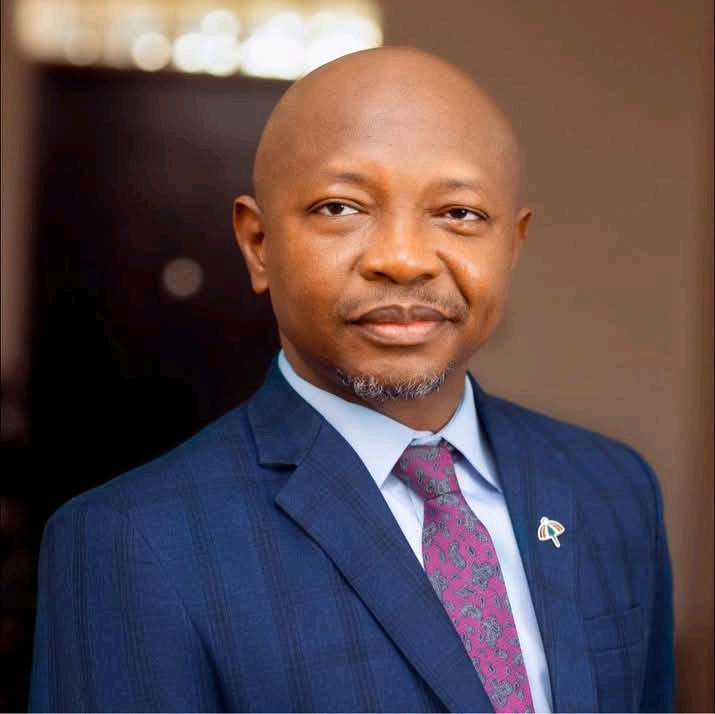
Article Written by: Ras Mubarak, Former MP – Kumbungu

Continue Reading
Click to comment

Leave a Reply

Your email address will not be published. Required fields are marked *

News

Playoff: Step onto the pitch as warriors not participants – Ibrahim Gagbuni to Tamale City

published by Inusah Dondaliya

15th April 2026

Astute Ghanaian Football Administrator based in UK, Mr. Ibrahim Gagbuni has a word of encouragement for Tamale City following the team’s qualification to play in the playoff against Debibi United.

Mr. Gagbuni underscored the team’s discipline, grit, and collective resolve, emphasizing that Tamale City has raised the flag of Northern region high.

”Hats off to Tamale City for sealing your playoff spot a testament to discipline, grit, and collective resolve. You’ve raised the flag of the Northern Region with pride”.

The bankroller of FC Tamale also warns the team against complacency going into the playoff, advising that the players should go into match as warriors but not just participants.

“No room for complacency only hunger. Step onto that pitch as warriors, not participants”.

Below is his full statement

Official message from
Ibrahim Gagbuni

Hats off to Tamale City for sealing your playoff spot a testament to discipline, grit, and collective resolve. You’ve raised the flag of the Northern Region with pride. Now, the ultimate test awaits.

This playoff isn’t just a match; it’s a statement of readiness for the Premier League. Carry the same defensive solidity, attacking intelligence, and unwavering belief that brought you here. Every tackle, every pass, every goal must echo your ambition. Congratulations to the entire Tamale city team .

No room for complacency—only hunger. Step onto that pitch as warriors, not participants. The city, the fans, and Ghana football are watching. Go silence the doubters and claim what’s yours: Premier League qualification.

Rise, Tamale City. Rise and conquer.

Continue Reading

News

THERE ARE POLITICAL MACHINATIONS TO DENY NORTHERN REGION A TRUE LEADER FOR UDS – DAGBON YOUTH CHIEFS

Published by Inusah Dondaliya

12th April 2026

The Youth Chiefs of Dagbon have raised serious concerns over selection of a Vice Chancellor to the University of Development Studies, claiming there are clandestine machinations to deny the people of the Northern Region a true person to lead the university.

The Dagbon Youth Chiefs have noted with anxiety that some potential candidates are playing ethnic cards with an excuse that since the establishment of the university their tribe person has never ascended to the high office of the school, describing it as not only hypocritical but dangerous.

In a press release dated today, Sunday 12th April 2026, signed by Secretary to the Youth Chiefs of Dagbon, Andani Yakubu, noted that the appointment of the Vice Chancellor for the University for Development Studies (UDS) presents a defining opportunity to reaffirm the principles of equity, inclusiveness, and context-sensitive leadership within Ghana’s higher education system especially in the Northern sector, overriding political or ethnic considerations.

The group further argues that UDS was uniquely established to advance the development of Northern Ghana through community-based research, practical engagement, and regionally relevant scholarship, stressing that its mandate is inseparable from the socio-cultural and economic realities of the northern regions, emphasizing that Leadership that understands this context is not optional, but fundamental.

The Youth Chiefs also anticipate that UDS will get a leader with strong ties; academic, professional, traditional, or cultural to the region it operates so as to engender peaceful coexistence between these bodies and the academic community in line with the pattern across Ghana’s public universities.

Meanwhile, they further hold the view that appointing a qualified Northern candidate as Vice Chancellor would not only uphold this established institutional logic but also reinforce the founding vision of UDS, explaining that a Northern scholar brings both academic excellence and lived experience, and invaluable combination for navigating the unique development challenges of the region, noting also that such a decision would also send a strong national message that fairness in leadership is not merely symbolic but operational.

Among 10 candidates vying for the Vice Chancellor Position of UDS, 3 candidates have been shortlisted. They include Prof. Mohammed Muniru Iddrisu, Prof. Elliot Haruna Alhassan, Prof. Felix Kofi Abagali.

Information gathered by Ghananewsnet.com shows that Prof. Mohammed Muniru Iddrisu, has the competence, capability and vast experience to occupy the office.

below is the full press release by the Dagbon Youth Chiefs

We, the Youth Chiefs of Dagbon and the Northern Region in general wish to express our support and commendations for the processes leading to the appointment of a new Vice-Chancellor for the University
for Development Studies (UDS).

While commending the processes so far, we are equally aware of the clandestine machinations to deny the people of the Northern Region an opportunity to serve its people as the case is in other sister
universities in northern Ghana and the country as a whole.

We are even more worried as it is widely rumoured that some potential candidates are making a case that since the inception of the university his or their ethnic group has never ascended to the high office of a
vice chancellor. This mindset is not only hypocritical but dangerous. The question we want to ask is: how many ethnic groups do we have in the university? and if the university is going to be subjected to such
baseless ethnic mindset can we ever make a progress?

The appointment of the Vice Chancellor for the University for Development Studies (UDS) presents a defining opportunity to reaffirm the principles of equity, inclusiveness, and context-sensitive leadership within Ghana’s higher education system especially in the Northern sector.

UDS was uniquely established to advance the development of Northern Ghana through community-based research, practical engagement, and regionally relevant scholarship. Its mandate is inseparable from the socio-cultural and economic realities of the northern regions. Leadership that understands this context is therefore not optional, it is fundamental.
Across Ghana’s public university system, there is a noticeable and consistent pattern: institutions often appoint leaders with strong ties; academic, professional, traditional, or cultural to the regions in which they operate so as to engender peaceful coexistence between these bodies and the academic community.

This has been evident in many universities across the country such as the University of Cape Coast, the University of Education, Winneba, and the University of Mines and Technology, where leadership has historically reflected deep familiarity with their institutional and regional
environments. UDS should not departed from this practice since there is evidence to show that it helps to drive development of the university.

Evidence from the University of Business and Integrated Development Studies (UBIDS) and the University of Technology and Applied Sciences (UTAS) all
created out of UDS shows that this practice is entrenched

This practice is grounded in pragmatism, not preference. Leaders who are closely connected to their regions are better positioned to engage local communities, align institutional priorities with regional
development needs, and build trust among the people and all stakeholders.UDS must not be an exception.

Appointing a qualified Northern candidate as Vice Chancellor would not only uphold this established institutional logic but also reinforce the founding vision of UDS. A Northern scholar brings both academic
excellence and lived experience, an invaluable combination for navigating the unique development challenges of the region.Such a decision would also send a strong national message: that fairness in leadership is not merely
symbolic but operational.

It affirms that every region has the capacity and the right to contribute meaningfully to the leadership of institutions designed to serve them.This is not a call for exclusion, but for balance, relevance, and continuity. The future of UDS depends on leadership that is both competent and deeply connected to its mission and region.

At this critical moment, stakeholders are urged to support a decision that reflects equity, strengthens institutional identity, and advances the developmental mandate of the University for Development
Studies.

The Zaachi Youth Association have maintained a very cordial and a positive relationship with the University management over the years and we do not wish this relationship to turn sour.
However, youth groups across the region are already in high alert to resist any attempt by any individual, group, or institution that seeks to deny the people of the Northern Region this
opportunity to serve its people.

LONG LIVE UDS, LONG LIVE THE PEOPLE OF THE NORTH

Continue Reading

News

DSP Jalil Bawah hands over IGP’s Special Operations team Command to Superintendent Augustine

Published on 8th April 2026

The outgoing leader of the IGP’s Special Operations team, DSP Bawah Abdul Jalil, has officially handed over command responsibilities to the new Commander, Superintendent Augustine Dawson Amoah who will be supported by three other senior officers.

At a formal handing-over ceremony which was held at the National Police Training School in Accra on 7th April 2026, to mark a change in leadership of the IGP Special Operations Team, DSP Jalil gave his word to the team.

In his remarks, DSP Bawah Abdul Jalil urged personnel to give their full cooperation and support to the new leadership to ensure continuity and operational effectiveness.

On his part, Superintendent Augustine Dawson Amoah, in his address, assured the team of his commitment to effective leadership and called for unity, discipline, and professionalism in the execution of their duties.

Source: Ghana Police

Continue Reading