News
RTU CEO Questions FA’s Selection Criteria for 2026 Division One League Super Cup

Details
Published: July 17, 2026
Published at: 12
Former sports journalist and Chief Executive Officer of Real Tamale United (RTU), Zakaria Safianu, has criticized the Ghana Football Association (GFA) over what he describes as an unfair selection process for the 2026 Division One League (DOL) Super Cup.
In a strongly worded statement, Safianu argued that while the automatic qualification of the top two teams from each of the three Division One League zones is widely accepted, the criteria used to determine the remaining two slots is flawed and discriminatory.
According to him, the GFA selected the two best third-placed teams from Zones Two and Three to complete the eight-team competition, leaving out the third-placed club from Zone One.

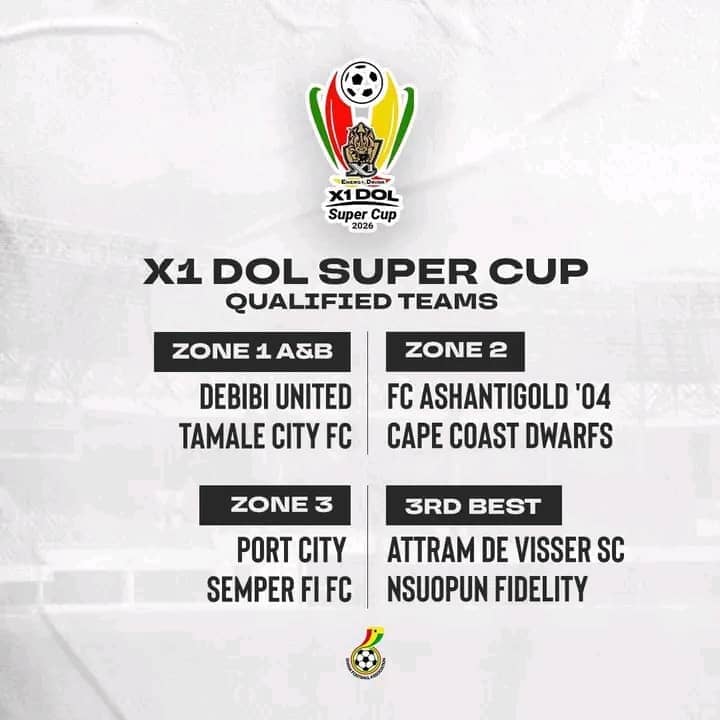
Safianu questioned the rationale behind the decision, insisting that the exclusion of Zone One reinforces long-standing concerns that clubs from Northern Ghana are often treated unfairly in national football competitions.
He acknowledged the FA’s desire to maintain an eight-team format but suggested that expanding the tournament to 10 clubs would have been a fairer solution, particularly with a major corporate sponsor now backing the competition.
To support his argument, Safianu pointed to the final league standings of the third-placed teams. Attram De Visser SC from Zone Two finished with 54 points from 30 matches, while Nsuopun Fidelity from Zone Three accumulated 51 points from the same number of games. RTU, however, collected 47 points after playing only 28 matches due to the shorter schedule in Zone One.
He argued that comparing clubs solely on total points is misleading because the three zones did not play an equal number of matches. In his view, RTU could have accumulated as many as 53 points had the club also played 30 matches, potentially surpassing one of the selected teams.
Safianu believes the current system creates a structural disadvantage for Zone One clubs and makes it extremely difficult for any northern team finishing third to qualify for the Super Cup.
To address the issue, he proposed two alternatives. The first is for the GFA to conduct a ballot involving the three third-placed teams from the respective zones to determine the final two qualifiers. The second is to expand the competition to 10 teams by including all three third-placed clubs alongside the reigning Ghana Premier League champions, creating what he believes could be rebranded as an FA Super Cup featuring clubs from Ghana’s top two divisions.
The RTU CEO also recalled that his club missed out on a promotional bus last season despite winning the Zone One title after the GFA revised its reward policy to benefit only the top three clubs across all zones. He described the latest Super Cup exclusion as another setback for the Tamale-based club.
Safianu has therefore called on the Ghana Football Association to review the selection criteria before the tournament begins, insisting that a fair and transparent process is essential to preserving the integrity and credibility of Ghana football.