Connect with us

News

THERE ARE POLITICAL MACHINATIONS TO DENY NORTHERN REGION A TRUE LEADER FOR UDS – DAGBON YOUTH CHIEFS
Published by Inusah Dondaliya

12th April 2026

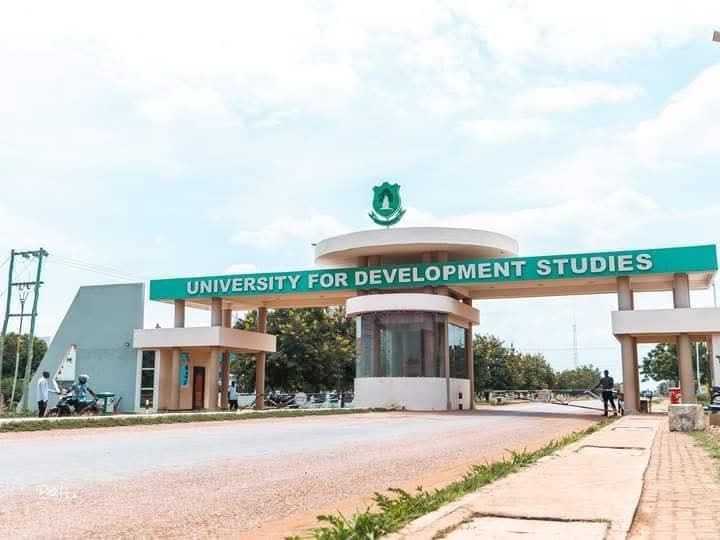
The Youth Chiefs of Dagbon have raised serious concerns over selection of a Vice Chancellor to the University of Development Studies, claiming there are clandestine machinations to deny the people of the Northern Region a true person to lead the university.

The Dagbon Youth Chiefs have noted with anxiety that some potential candidates are playing ethnic cards with an excuse that since the establishment of the university their tribe person has never ascended to the high office of the school, describing it as not only hypocritical but dangerous.

In a press release dated today, Sunday 12th April 2026, signed by Secretary to the Youth Chiefs of Dagbon, Andani Yakubu, noted that the appointment of the Vice Chancellor for the University for Development Studies (UDS) presents a defining opportunity to reaffirm the principles of equity, inclusiveness, and context-sensitive leadership within Ghana’s higher education system especially in the Northern sector, overriding political or ethnic considerations.

The group further argues that UDS was uniquely established to advance the development of Northern Ghana through community-based research, practical engagement, and regionally relevant scholarship, stressing that its mandate is inseparable from the socio-cultural and economic realities of the northern regions, emphasizing that Leadership that understands this context is not optional, but fundamental.

The Youth Chiefs also anticipate that UDS will get a leader with strong ties; academic, professional, traditional, or cultural to the region it operates so as to engender peaceful coexistence between these bodies and the academic community in line with the pattern across Ghana’s public universities.

Meanwhile, they further hold the view that appointing a qualified Northern candidate as Vice Chancellor would not only uphold this established institutional logic but also reinforce the founding vision of UDS, explaining that a Northern scholar brings both academic excellence and lived experience, and invaluable combination for navigating the unique development challenges of the region, noting also that such a decision would also send a strong national message that fairness in leadership is not merely symbolic but operational.

Among 10 candidates vying for the Vice Chancellor Position of UDS, 3 candidates have been shortlisted. They include Prof. Mohammed Muniru Iddrisu, Prof. Elliot Haruna Alhassan, Prof. Felix Kofi Abagali.

Information gathered by Ghananewsnet.com shows that Prof. Mohammed Muniru Iddrisu, has the competence, capability and vast experience to occupy the office.

below is the full press release by the Dagbon Youth Chiefs

We, the Youth Chiefs of Dagbon and the Northern Region in general wish to express our support and commendations for the processes leading to the appointment of a new Vice-Chancellor for the University
for Development Studies (UDS).

While commending the processes so far, we are equally aware of the clandestine machinations to deny the people of the Northern Region an opportunity to serve its people as the case is in other sister
universities in northern Ghana and the country as a whole.

We are even more worried as it is widely rumoured that some potential candidates are making a case that since the inception of the university his or their ethnic group has never ascended to the high office of a
vice chancellor. This mindset is not only hypocritical but dangerous. The question we want to ask is: how many ethnic groups do we have in the university? and if the university is going to be subjected to such
baseless ethnic mindset can we ever make a progress?

The appointment of the Vice Chancellor for the University for Development Studies (UDS) presents a defining opportunity to reaffirm the principles of equity, inclusiveness, and context-sensitive leadership within Ghana’s higher education system especially in the Northern sector.

UDS was uniquely established to advance the development of Northern Ghana through community-based research, practical engagement, and regionally relevant scholarship. Its mandate is inseparable from the socio-cultural and economic realities of the northern regions. Leadership that understands this context is therefore not optional, it is fundamental.
Across Ghana’s public university system, there is a noticeable and consistent pattern: institutions often appoint leaders with strong ties; academic, professional, traditional, or cultural to the regions in which they operate so as to engender peaceful coexistence between these bodies and the academic community.

This has been evident in many universities across the country such as the University of Cape Coast, the University of Education, Winneba, and the University of Mines and Technology, where leadership has historically reflected deep familiarity with their institutional and regional
environments. UDS should not departed from this practice since there is evidence to show that it helps to drive development of the university.

Evidence from the University of Business and Integrated Development Studies (UBIDS) and the University of Technology and Applied Sciences (UTAS) all
created out of UDS shows that this practice is entrenched

This practice is grounded in pragmatism, not preference. Leaders who are closely connected to their regions are better positioned to engage local communities, align institutional priorities with regional
development needs, and build trust among the people and all stakeholders.UDS must not be an exception.

Appointing a qualified Northern candidate as Vice Chancellor would not only uphold this established institutional logic but also reinforce the founding vision of UDS. A Northern scholar brings both academic
excellence and lived experience, an invaluable combination for navigating the unique development challenges of the region.Such a decision would also send a strong national message: that fairness in leadership is not merely
symbolic but operational.

It affirms that every region has the capacity and the right to contribute meaningfully to the leadership of institutions designed to serve them.This is not a call for exclusion, but for balance, relevance, and continuity. The future of UDS depends on leadership that is both competent and deeply connected to its mission and region.

At this critical moment, stakeholders are urged to support a decision that reflects equity, strengthens institutional identity, and advances the developmental mandate of the University for Development
Studies.

The Zaachi Youth Association have maintained a very cordial and a positive relationship with the University management over the years and we do not wish this relationship to turn sour.
However, youth groups across the region are already in high alert to resist any attempt by any individual, group, or institution that seeks to deny the people of the Northern Region this
opportunity to serve its people.

LONG LIVE UDS, LONG LIVE THE PEOPLE OF THE NORTH

Continue Reading
Click to comment

Leave a Reply

Your email address will not be published. Required fields are marked *

News

Manhaliya Islamic Institute dismisses allegation of Sheikh Khalid Gima highjacking leadership role

Details

Published by Inusah Dondaliya

Date: 12th June 2026

Management of Manhaliya Islamic Institute has maintained that its leadership is under the guidance of Sheikh Tanim Abdallah, clarifying that Sheikh Khalid Husein Jimah has not highjacked the leadership role of the Institution contrary to the misconception bandied around in the media space especially on social Media.

At Press briefing at the Manhaliya Mosque in Tamale, immediately after Jumah Prayers, Sheikh Abdul Wahab Alhassan, noted that Sheikh Khalid Jimah was nominated in 2010 to support the leadership of the institution, receiving overwhelming endorsement by Stakeholders in Manhaliya, stressing that under no circumstance he attempted to arrogate supreme powers to himself at the institution as the leader.

0-4608×3466-0-0#

The Leadership of Mahanliya described the the current development in connection to Sheikh Gima as not only ‘fabricated lies’, but also termed it as ‘misinformation and disinformation’, aimed at tainting the image of Manhaliya and the revered Sheikh Khalid Husein Jima, using social media as a stool.

Therefore, Manhaliya Islamic Institute is urging the general public to disregard the false news circulating on the New Media about the institution, insisting that it remains focused on providing the right learning environment to produce learners, refine their potentials for prosperous future.

“Owing to the realities of age and the need to adapt to leadership responsibilities in an orderly manner Sheikh Husein Khalid Jima wasnominated in 2010 to support in the leadership of the Institution. His nomination was unanimously endorsed by all stakeholders within the Manhalia fraternity. Unfortunately, some individuals
misconstrued this development and proceeded to fabricate lies, spread misinformation and disseminate disinformation through social media just to taint the image of Manhalia and our beloved Sheikh Jima. The claim that our Sheikh fought and lobbied for leadership within Manhalia Islamic Institute is entirely
untrue and constitutes a blatant falsehood. These are baseless speculations emanating from individuals who lack proper knowledge of the Institution”

At the Press Conference, Sheikh Abdul Wahab also gave historical background of the Manhaliya Institution, stating that it was founded by Sheikh Mohammed Issah Bello in 1972 with 20 students in his house.Adding that Sheikh Bello subsequently secured land in 1981 to establish the institution which has survived decades of existence till now, combining English and Arabic education.

Continue Reading

News

Thomas Partey Ruled Out of Ghana’s Opening World Cup Match Against Panama After Canadian Visa Refusal

Details

Published: June 11 2026

Published at: 5:55Pm

Story by Saibu Terry

Ghana’s preparations for their opening fixture of the 2026 FIFA World Cup have suffered a significant setback following confirmation that midfielder Thomas Partey will be unable to travel to Canada for the team’s first match against Panama on Wednesday, June 17.

According to information released by FIFA, the experienced midfielder has been denied a Canadian visa, preventing him from joining his teammates for the highly anticipated Group Stage encounter.

Partey, who is currently with the Black Stars camp in Boston, USA, had been expected to play a crucial role in Ghana’s opening game due to his experience, leadership qualities, and influence in midfield. However, the visa refusal means the former Ghana captain will remain in the United States while efforts continue to resolve the situation.

The development comes as a major disappointment for head coach Otto Addo and the technical team, who had counted on Partey’s presence to provide stability and experience against a strong Panamanian side.

The 33-year-old midfielder has been one of Ghana’s most dependable performers over the past decade, featuring in multiple Africa Cup of Nations tournaments and World Cup campaigns. His absence leaves a significant gap in the Black Stars’ midfield as the four-time African champions seek a positive start to their World Cup journey.

Sources close to the team indicate that the Ghana Football Association (GFA), in collaboration with FIFA and relevant diplomatic authorities, is exploring possible avenues to address the visa issue. However, with the match scheduled for June 17, time remains a critical factor.

The Black Stars have been holding their pre-tournament training camp in Boston, where players and officials have expressed confidence in the team’s readiness despite the unexpected setback.Ghana will face Panama in their opening Group Stage match before taking on other opponents in what is expected to be a highly competitive campaign.

Supporters across the country and the Ghanaian diaspora will be hoping the team can overcome Partey’s absence and begin the tournament on a winning note.Further updates are expected from FIFA and the Ghana Football Association regarding Partey’s availability for subsequent matches in the tournament.

Continue Reading

News

Managing Our Leaders: Hardi Pagazaa Raises Concerns Over Growing Trend in Dagbon

Details

Published: 11 June 2026

Published at: 9:09

Story by Saibu Terry

Political communicator and social commentator Hardi Pagazaa has expressed concern over what he describes as a disturbing trend in Dagbon regarding the management of traditional and religious leaders, following two recent incidents that attracted widespread attention on social media.

In a statement shared on his official Facebook page, Pagazaa cited the recent announcement of the passing of Naa Bapra Nyong Lana, Col. (Rtd) Abdulai, Paramount Chief of the Nyong Traditional Area in the Karaga District. According to him, news of the chief’s death spread rapidly across social media platforms while the body was still in Accra, a development he believes disregarded Dagbon customs and the emotions of the bereaved family.

He noted that the incident was not isolated, recalling similar occurrences involving the late Naa Yeb’ Nanton Naa Sulemana and Naa Bapra Mion Lana Abdulai. While criticizing bloggers and social media users for circulating such sensitive information prematurely, Pagazaa argued that a significant portion of the responsibility lies with individuals entrusted with managing and safeguarding information concerning traditional leaders.

“The haste to inform trusted people is the major cause. Any secret beyond one person is no longer a secret,” he remarked, urging social media activists to respect Dagbon traditions and avoid actions that could portray the culture negatively.

Pagazaa also referenced a widely circulated video involving Sheikh Saeed Zakaria, head of the Ambariya Islamic Community and one of Ghana’s most respected Islamic scholars. The video addressed concerns surrounding the establishment of the Ambariya Islamic Education Unit and allegations of interference in a protocol list that had been submitted.

According to Pagazaa, the matter could have been resolved discreetly through dialogue rather than becoming a subject of public debate on social media. He suggested that those responsible for managing the affairs of the respected cleric failed to handle the issue appropriately.

“A word from Afa Saeed is an authority and must be respected at all times and in all situations,” he stated.

He further observed that the decision by the Ghana Education Service and the Ministry of Education to grant Ambariya an independent educational unit was never intended to become a social media controversy. In his view, the disagreement, reportedly centered on the omission of a single name from a protocol list, could easily have been addressed through administrative channels.

Pagazaa concluded by calling for the engagement of professionals to manage the communications and public affairs of traditional rulers and religious leaders, arguing that proper management would help prevent avoidable controversies and protect the dignity and authority of respected institutions in Dagbon.

“It’s time professionals are hired to manage our leaders,” he emphasized.

Continue Reading